Hur man äter en kalciumrik vegetarisk kost
Granskad av Dr Krishna Vakharia, MRCGPSenast uppdaterad av Ellie BroughtonSenast uppdaterad 17 jan 2024
Uppfyller patientens redaktionella riktlinjer
- Ladda nerLadda ner
- Dela
- Language
- Diskussion
- Ljudversion
- Lägg till i föredragna källor på Google
Calcium has many important functions in our bodies. It helps build bones and keeps our teeth healthy. It also makes sure our blood clots normally and regulates muscle contractions. Not enough calcium can lead to osteomalacia or osteoporosis when we're older.
Why do we need calcium?
At every age, we need to be consuming enough kalcium from our food. This important nutrient is needed for bone strength, nerve function, muscle function, and allows blood to clot which prevents excessive bleeding.
There are also some groups of people for whom calcium is particularly important:
Babies and children - need calcium to develop strong, healthy bones and teeth.
Pregnant and breastfeeding women - need more calcium to help their babies develop.
Postmenopausal women - the drop in oestrogen production after menopause makes women's bodies less able to retain calcium.
Elderly people of both sexes - need plenty of calcium to prevent age-related bone loss (osteoporosis).
How easy is it to eat a calcium-rich vegetarian diet?
Getting enough calcium in your diet is important to stay healthy. Jo Travers, a nutritionist and registered dietitian, believes it's easy enough to get the calcium we need.
Calcium is a macro mineral, meaning we need quite a lot of it compared to some of the other minerals. But most people can get enough calcium from their diet," she explains.
Vitamin D-tillskott
We also need good levels of vitamin D to absorb calcium. "If you haven't got enough vitamin D, it doesn't matter how much calcium you have in your diet, you won't absorb it," Travers explains.
In the UK, it's recommended that everyone - whatever ethnicity - considers taking vitamin D supplements from October to April. This is because we get most of our vitamin D through sunlight, and the lack of sun in the winter months simply isn't able to provide our bodies with enough.
Kalciumtillskott
Some people may be restricted in the calcium-rich foods they eat, and for these people Travers also recommends calcium supplements.
For example, if you have IBS you may avoid lentils and beans, or if you are lactose intolerant you need to avoid dairy sources of calcium, including milk and yoghurt.
How much calcium do you need?
According to the Association of UK dietitians (BDA)1, each day adults generally need 700 milligrammes (mg) of calcium. This is the same as having a 120g pot of plain yoghurt, 100g serving of kale, and 100g serving of tofu (made with calcium chloride or calcium sulphate) in one day.
There are some groups of people who need more:
Breastfeeding people need 1250 milligrammes.
People with osteoporosis need 1250mg, or up to 1000mg when they take osteoporosis treatments.
People with coeliac disease need 1000-1500mg a day.
People on corticosteroids for IBD need 800-1000mg a day - and should discuss supplements with a doctor.
Calcium-rich vegetarian foods
Calcium-rich foods for pescatarians
If you're a pescatarian who eats fish, this is a great source of calcium, For example1:
Half a tin of bone-in sardines contains up to 407mg.
50g of whitebait contains around 430mg.
6 pieces of scampi contains around 90mg.
Calcium-rich dairy foods
For vegetarians who eat dairy products, calcium is also generally easy to come by1:
A glass of cow's milk (250ml) contains an around 300mg. You can find 120mg of calcium in a flat white.
A 30g serving of cheddar - roughly a matchbox's-worth - contains 222mg.
A 120g pot of full-fat yoghurt contains 193mg.
Plant-based calcium-rich foods
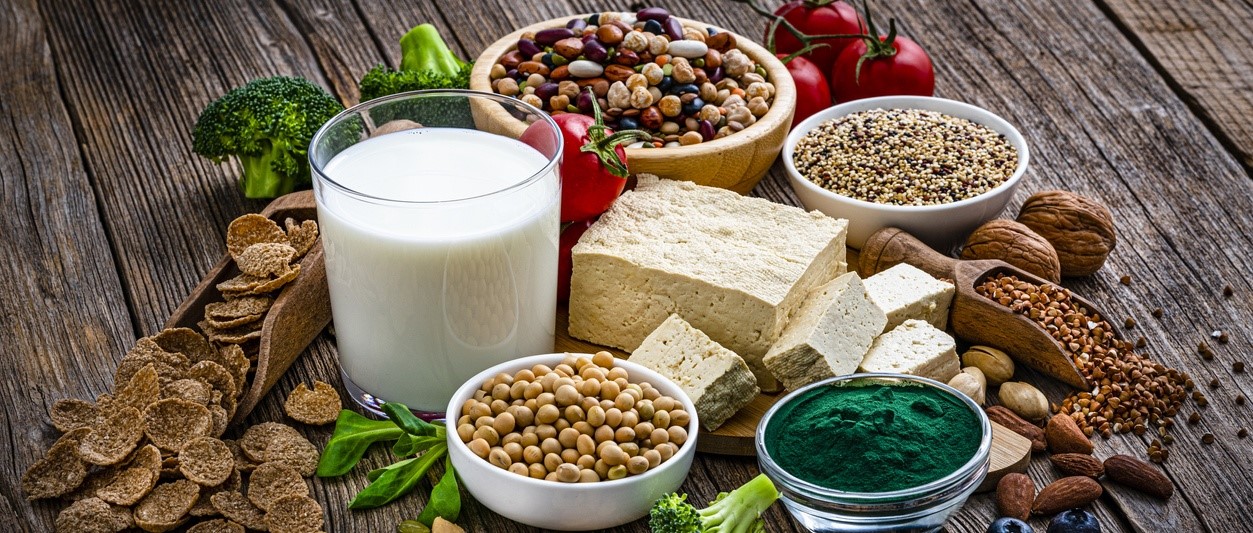
If you follow a plant-based diet that excludes dairy, this doesn't have to mean your calcium intake is low. Travers says that cruciferous vegetables, beans, lentil and chickpeas are rich sources of calcium.
"These are probably the best sources of calcium, and the reason they are so good for vegans and vegetarians is because often - or hopefully, at least - they will already be eating these foods, because they're a great source of protein and a really good source of iron," she says.
"I also recommend vegetarians to add beans, lentils and chickpeas in their diet in place of meat - as the main protein source in meals. But unlike meat, they have the added benefit of calcium."
Till exempel2,3:
200g of cooked chickpeas contains around 100mg.
200g of cooked lentils contains around 40mg.
200g of cooked white beans contains around 132mg.
One cup of cooked collard greens contains around 266mg.
One cup of cooked broccoli contains around 60mg.
One cup of cooked kale contains around 179mg.
Fortified plant-based foods
Fortified foods have nutrients added to them so they are more beneficial - and they can be an easy way to sneak calcium in, too. For example, while foods fortified with calcium tend to vary between brands, these are the average amounts of calcium they provide, according to the BDA1:
One serving of fortified cereal (30g) contains up to 174mg.
Two slices of fortified white bread contains 155mg - or 106mg for brown bread.
A 100g uncooked serving of tofu made with calcium chloride or calcium sulphate contains 350-400mg.
A serving of plant-based fortified milk - such as oat, nut or soya - in your tea or coffee (100ml) contains 120-189mg.
Travers says: "Fortified plant based milks are probably where most vegans get their calcium from, especially those who don't eat beans, lentils or chickpeas. They are generally fortified with the same amount of calcium you get from dairy milk."
Is fortified plant milk calcium easy to absorb?
The dietitian explains that, generally speaking, it's harder for our bodies to absorb calcium from a fortified product than from foods that naturally contain this important nutrient.
The other thing about fortified plant based milks is that often the calcium sinks to the bottom of the carton. And shaking doesn't necessarily make that much difference. So plant-based milk can have its drawbacks. But, unlike iron, our bodies can absorb calcium in tea or coffee."
It's also worth bearing in mind that some plant milks have more artificial additives and added sugars than others. Find out how to choose a healthy dairy-free milk or make it at home.
Vidare läsning
Patientval för Vegan and vegetarian
Kost och näring
5 enkla veganska byten för Veganuary 2026
Om du gillar kött kan tanken på en helt växtbaserad kost vara mycket skrämmande. Vad händer om dina begär efter bacon blir för starka? Och hur många fler recept måste du lära dig? Här pratar vi med kocken Isabella Flint om hur man gör Veganuary lite enklare. Hon delar med sig av sina fem enkla veganska byten för att hjälpa till att dämpa dina köttbegär.
av Victoria Raw
Kost och näring
En vegansk kost förbättrar hjärthälsan, enligt en studie av enäggstvillingar
Ett ökande antal människor blir veganer för att förbättra sin hälsa eftersom det är känt att äta mindre kött minskar risken för hjärtsjukdomar och stroke. Dock är koststudier ofta begränsade av faktorer som genetiska skillnader. Nu föreslår en banbrytande studie med enäggstvillingar att en vegansk kost kan förbättra hjärt-kärlhälsan på bara åtta veckor.
av Lydia Smith
Om författaren

Ellie Broughton
Om recensentenVisa fullständig biografi

Dr Krishna Vakharia, MRCGP
Medicinsk chef för hälsa, Optum UK
MBChB, MRCGP(2013), BMedSci (hons), DFSRH, DRCOG, PGDipDerm (Distn)
Dr Krishna Vakharia är en NHS-läkare. Hon är också en regelbunden examinator för den postgraduate Diplom i Praktisk Dermatologi vid Cardiff University samt Chief Medical Officer för hälsa på Optum UK.
Artikelhistorik
Informationen på denna sida är granskad av kvalificerade kliniker.
Artikeln finns också på Engelska, Tyska, Spanska, Franska, Italienska, Portugisiska, Hindi, Hebreiska, Arabiska, och Svenska.
17 jan 2024 | Senaste versionen
17 jan 2024 | Ursprungligen publicerad

Fråga, dela, anslut.
Bläddra i diskussioner, ställ frågor och dela erfarenheter inom hundratals hälsorelaterade ämnen.

Känner du dig sjuk?
Bedöm dina symtom online gratis
Anmäl dig till Patientens nyhetsbrev
Din veckovisa dos av tydliga, pålitliga hälsoråd - skrivna för att hjälpa dig känna dig informerad, självsäker och i kontroll.
Genom att prenumerera accepterar du våra Sekretesspolicy. Du kan avsluta prenumerationen när som helst. Vi säljer aldrig dina uppgifter.
Mer om kost och näring
- Är kosttillskott för ledvärk värda dina pengar?
- Bebisar födda med kejsarsnitt har annan tarmflora än de som föds vaginalt
- Kan kollagentillskott förbättra din hälsa?
- Fungerar gummivitaminer?
- Behöver du verkligen ge upp socker?
- Fetleverdiet: mat att äta och undvika
- Have a happy and healthy Ramadan
- Hur man gör hälsosammare val utan att gå miste om något
- Hur man gör hälsosamma rostade potatisar
- Hur du förbereder din mat spelar roll
- Hur din tarm påverkar din allmänna hälsa
- Is it safe for everyone to take probiotics?
- Finns det en koppling mellan tarmhälsa och migrän?
- Är gurkmeja bra för dig?
- Den senaste supermaten - vad är uppståndelsen kring mikrogrönt?
- The longevity diet - can it add years to your life?
- Vilka är fördelarna med probiotika för bebisar?
- Vad händer med din kropp när du blir vegan?
- Vilken är den bästa kosten för Crohns sjukdom?
- Vilka ultraprocessade livsmedel är säkra - och vilka bör vi undvika?