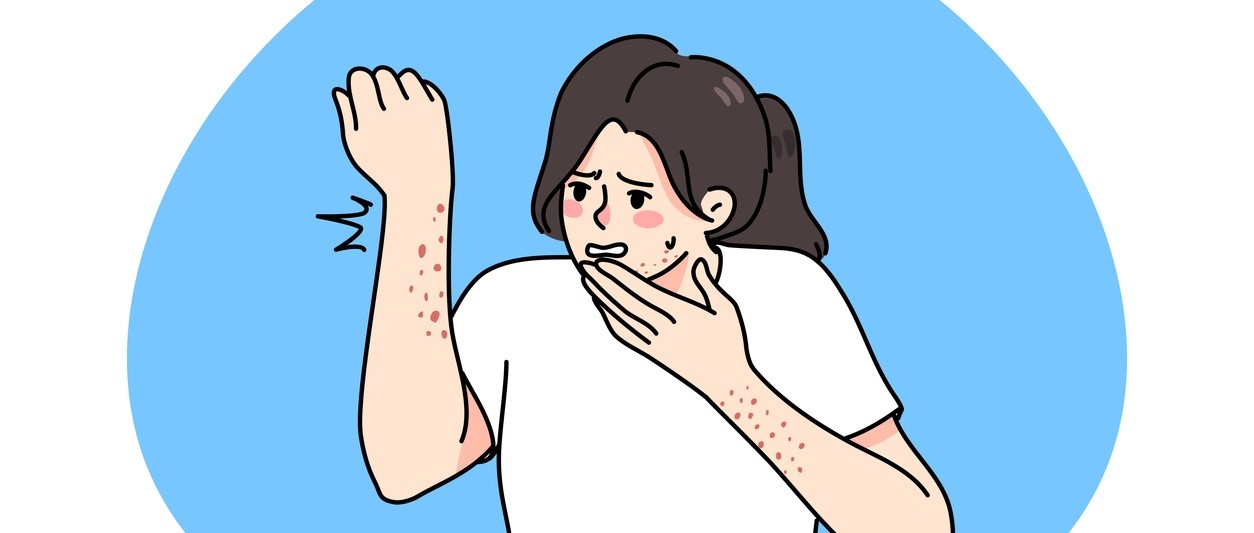
Ökning av skabbfall över hela Storbritannien
Granskad av Dr Krishna Vakharia, MRCGPFörfattad av Amberley DavisUrsprungligen publicerad 4 Jan 2024
Uppfyller patientens redaktionella riktlinjer
- Ladda nerLadda ner
- Dela
- Language
- Diskussion
- Ask Patient
- Ljudversion
- Lägg till i föredragna källor på Google
The number of people with scabies is around double the expected amount for this time of year. We explain what scabies is, how to spot it, and what to do about it.
Explore scabies treatment options
Get expert healthcare advice from the comfort of home. Complete a quick online consultation, available 24/7, with your request reviewed by a UK-registered clinician. Next day delivery available on eligible treatments.

Doctors report surge in scabies
According to a new report from the British Association of Dermatologists (BAD), 8 out of the 9 regions across the UK have seen an increase in scabies this year.
Professor Kamila Hawthorne, chair at the Royal College of General Practitioners (RCGP) commented on the surge: "Since July, GPs have seen a growing rate of scabies - at a consistently higher level than the five-year average and the seasonal norm. At the end of November, the rate of scabies was double the seasonal average."
The North of England appears to be most affected. Due to the highly contagious nature of scabies, outbreaks in nursing homes, care homes, and university accommodation are more common, where people are closer together.
How to prevent scabies
Skabb is an intensely itchy skin condition caused by tiny insects known as mites, which are almost invisible to the naked eye. It can spread between people through close skin contact.
Therefore, the best way to protect yourself against scabies is to:
Avoid touching someone who shows the symptoms below.
Avoid sharing clothes, towels, and bedsheets with them.
Hot wash your bedding and towels at 50°C or above if they have been used by them.
Anyone can get scabies, so it's important to know the signs so it can be treated and prevented from spreading.
How to spot scabies
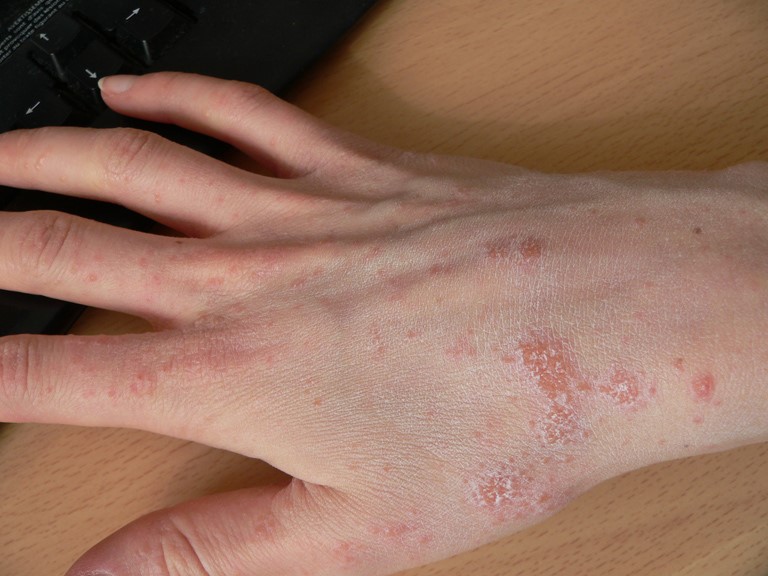
Scabies appears as blotchy, lumpy red rashes. It's common to first notice them on your hands, and they also tend to form on the stomach, lower back, and thighs - although they can appear anywhere on your body.
These rashes are often very itchy and cause you to scratch the affected areas, which can further damage your skin. It might be that this itchiness starts in one place, and then spreads to other areas you touch.
You might also see small dark-grey lines on your skin, most commonly in between your fingers, on your wrists, and in the palms of your hands. However, these aren't always visible.
Scabies rash on hand
What to do if you have scabies
If you think you might have scabies:
It's important to get treatment to help prevent the condition spreading to others.
Try and avoid skin contact with other people as much as possible.
Either your pharmacist or GP can diagnose this condition based on how your rash looks.
Treatment involves a cream or lotion you apply to your skin.
In the UK, the two main treatment creams are called permethrin and malathion. These are usually available in pharmacies and GP surgeries, however the surge in scabies cases comes during a shortage of both medicines.
This is thought to be due to the increase in demand, supply chain issues, a rise in the cost of raw materials, and the war in Ukraine, according to BAD1.
Currently, the availability of scabies treatment will depend on where you are, so it's important that you try your pharmacist or doctor, instead of suffering this uncomfortable condition and possibly passing it on to others.
If you have problems getting treatment, home remedies like neem, tea tree oil, and clove oil may help ease your itching in the meantime but it won't get rid of the mites.
Vidare läsning
Explore scabies treatment options
Get expert healthcare advice from the comfort of home. Complete a quick online consultation, available 24/7, with your request reviewed by a UK-registered clinician. Next day delivery available on eligible treatments.
Patientval för Hudutslag

Hud, nagel och hårhälsa
Scharlakansfeber: en läkares råd
With a surge in cases of scarlet fever, GP and mum, Dr Krishna Vakharia, our clinical director here at Patient.info, talks about what you need to know and what to do if you're worried.
av Dr Krishna Vakharia, MRCGP

Hud, nagel och hårhälsa
Vad du ska göra när ditt barn har utslag
As a parent, it's hard not to panic when your child develops a rash. But these disturbing skin flare-ups are often nothing to worry about. Follow our troubleshooting guide to see what to do about your child's rash.
av Gillian Harvey
Om författarenVisa fullständig biografi
Författad av

Amberley Davis
Seniorförfattare
BA (Hons), CPD
Amberley är en senior skribent hos Patient och har skrivit omfattande om en rad olika hälso- och välbefinnandeämnen.
Om recensentenVisa fullständig biografi

Dr Krishna Vakharia, MRCGP
Medicinsk chef för hälsa, Optum UK
MBChB, MRCGP(2013), BMedSci (hons), DFSRH, DRCOG, PGDipDerm (Distn)
Dr Krishna Vakharia är en NHS-läkare. Hon är också en regelbunden examinator för den postgraduate Diplom i Praktisk Dermatologi vid Cardiff University samt Chief Medical Officer för hälsa på Optum UK.
Artikelhistorik
Artikeln finns också på Engelska, Tyska, Spanska, Franska, Italienska, Portugisiska, Hindi, Hebreiska, Arabiska, och Svenska.
4 Jan 2024 | Ursprungligen publicerad
Författad av:
Amberley DavisGranskad av
Dr Krishna Vakharia, MRCGP
Dela dina tankar eller erfarenheter med andra i vår patientgemenskaper.
Enkel tillgång till pålitliga behandlingar och hälsotjänster online.
Common conditions
Get help with common conditions through the NHS, without a GP appointment.





Anmäl dig till Patientens nyhetsbrev
Din veckovisa dos av tydliga, pålitliga hälsoråd - skrivna för att hjälpa dig känna dig informerad, självsäker och i kontroll.
Genom att prenumerera accepterar du våra Sekretesspolicy. Du kan avsluta prenumerationen när som helst. Vi säljer aldrig dina uppgifter.