
Det bästa sättet att behandla ett herpesutbrott
Granskad av Dr Sarah JarvisSenast uppdaterad av Dr Laurence KnottSenast uppdaterad 17 Sept 2018
Uppfyller patientens redaktionella riktlinjer
- Ladda nerLadda ner
- Dela
- Language
- Diskussion
- Ljudversion
- Lägg till i föredragna källor på Google
En forumanvändare skrev att hon hade fått genital herpes från sin nya partner. Hon bad om råd om hur man behandlar ett utbrott och ville veta om det fanns något som kunde hjälpa till att lindra smärtan från såren hon fick i sitt genitala område.
What happens during an outbreak?
Genital herpes is an infection caused by the herpes simplex virus. You catch it by having intimate (usually sexual) contact with someone who has the virus.
In between episodes, most people don't know they have been infected by it. The virus remains in your nervous system and can be reactivated from time to time to give you symptoms. Outbreaks can occur in the genital area if the first (primary) infection was in the genitals. They cause crops of small painful blisters in the genital area and back passage (anus). Herpes can also cause recurrent cold sores if the primary infection was around the mouth.
No one knows why outbreaks occur, although sunlight, physical illness, excess alcohol, and stress are all thought to be trigger factors. They often do become less frequent over time.
Recurrent episodes of genital herpes generally don't last as long as the first outbreak. They are sometimes preceded by itching or tingling in the genital area. Recurrent outbreaks usually last about 7-10 days, shorter than the primary infection which can last up to two weeks. They are also often milder than a primary infection but as the original poster found, the shallow ulcers left when the blisters break can still be quite painful.
Do natural remedies help?
There are several options that can be tried to ease the pain. Patient 1 and Patient 2 suggest dabbing cornstarch directly on the sores. I can't find any scientific studies that have researched this, but I can't see that it would do any harm.
Patient 3 also recommends squirting water from a bottle over the sores when you pee. This is a time-honoured method that will help to ease the pain.
Patient 4 mentioned taking a simple painkiller such as paracetamol during an outbreak. Patient 5 advised putting Vaseline on the sores. Lidocaine 5%, a local anaesthetic gel that numbs the area, is another option. Some people find it helpful to put on five minutes before passing urine. You need to get it on prescription and it doesn't suit everyone. Some people develop sensitivity to it which makes the symptoms worse.
Patient 4 also advised using ice as a home remedy. Simply wrap the ice in a tea towel and apply for 5-10 minutes. Never put ice directly on the skin as this can cause 'ice burn'. Drinking plenty of water can also be helpful as it reduces the concentration of urine, making it less painful when you have to pee.
Patient 5 mentioned putting aloe vera gel on the sores. There is some scientific evidence that aloe vera is useful for both genital och oral herpes.
Antivirals
Inevitably, the subject of antiviral medicines came up. Patient 2 took one daily for many years until she ran out, then decided to see how she got on without it. All the posters commenting on antivirals mentioned Valtrex (valaciclovir) There are two other antivirals licensed for the treatment of genital herpes in the UK - aciclovir och famciclovir.
The fact is that antivirals have a limited role in the treatment of recurrences. They are useful during a first episode of genital herpes and for people who get severe repeated attacks, but many people who have occasional mild episodes don't find they make much difference. Like Patient 2, some people are prescribed an antiviral for regular daily use to prevent frequent attacks. There is also good evidence that they reduce the risk of passing on the virus.
Other good tips are to avoid scented soap or bubble bath and clean the sores just with cotton wool and plain or salt water. Also, when you do start having sex again, make sure you use a lubricant, as friction can start another attack.
How to cope after diagnosis
Many posters were occupied with the issue of passing on the infection. Patient 4 points out that you can minimise the risk of transmission by postponing sex until all the sores have healed. She also mentioned that condoms should be used. They won't completely prevent transmission (because the virus can be passed anywhere where there is contact with the sores) but they will help.
Ending on a positive note, many posters emphasised that there was light at the end of the tunnel. Learning of the diagnosis may feel stressful at first, but it's a manageable condition and certainly nothing to be ashamed of. Patient 6 has had genital herpes for 25 years. She's been married for 18 years and has two sons - living proof that there is life after herpes.
Patientval för Seksuellt överförbara infektioner
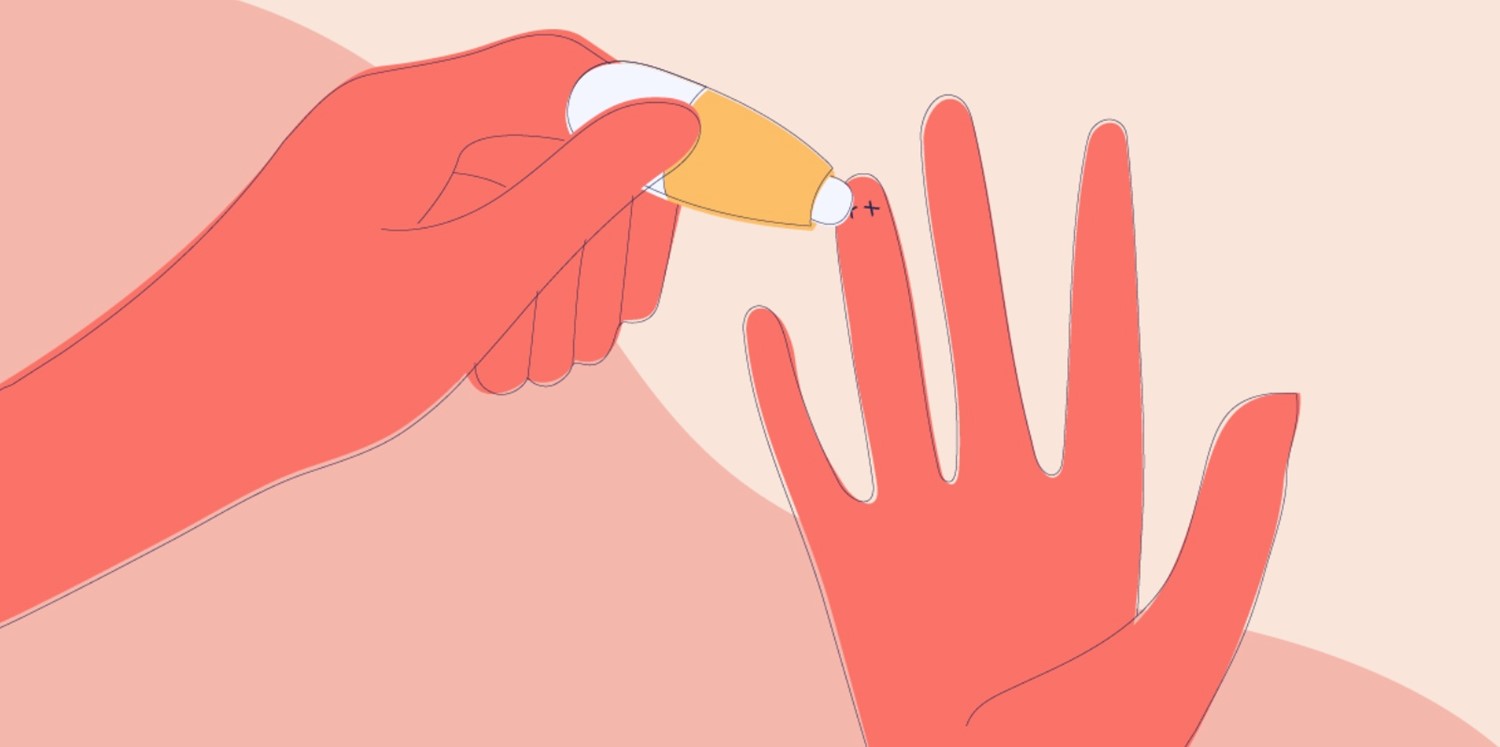
Sexuell hälsa
Hemma-STD-tester: hur de fungerar och vad du kan förvänta dig
Sexually transmitted infections (STI) diagnoses reached record levels in 2022 in the UK. So it's never been more important to get tested - and home STI tests are a simple, quick, and accurate way look after your health. Here's what you need to know about home STI tests, their reliability, and how easy they are to use.
av Amberley Davis

Sexuell hälsa
Hur man hanterar en genital herpesdiagnos
Missuppfattningar om genital herpes ökar stigmat kring denna vanliga sexuella hälsoproblem och kan göra det svårt att hantera, särskilt efter ett första utbrott och initial diagnos. Vi avlivar myterna och tittar på hur man effektivt kan hantera tillståndet.
av Sally Turner
Om författarenVisa fullständig biografi

Dr Laurence Knott
Allmänläkare, Medicinsk Författare
BSc (Hons) Biokemi, Läkarexamen
Dr Laurence Knott kvalificerade sig 1973 och har haft omfattande erfarenhet som allmänläkare.
Om recensentenVisa fullständig biografi

Dr Sarah Jarvis
Klinisk konsult
MA (Cantab), BM, BCh (Oxon), DRCOG, FRCGP, MBE
Efter att ha utbildat sig i medicin vid Cambridge och Oxford blev Dr Sarah Jarvis MBE allmänläkare.
Artikelhistorik
Informationen på denna sida är granskad av kvalificerade kliniker.
Artikeln finns också på Engelska, Tyska, Spanska, Franska, Italienska, Portugisiska, Hindi, Hebreiska, Arabiska, och Svenska.
17 Sept 2018 | Senaste versionen

Fråga, dela, anslut.
Bläddra i diskussioner, ställ frågor och dela erfarenheter inom hundratals hälsorelaterade ämnen.

Känner du dig sjuk?
Bedöm dina symtom online gratis
Anmäl dig till Patientens nyhetsbrev
Din veckovisa dos av tydliga, pålitliga hälsoråd - skrivna för att hjälpa dig känna dig informerad, självsäker och i kontroll.
Genom att prenumerera accepterar du våra Sekretesspolicy. Du kan avsluta prenumerationen när som helst. Vi säljer aldrig dina uppgifter.
Mer om sexuell hälsa
- Kan du förhindra genombrottsblödning när du tar p-piller?
- Hur en underaktiv sköldkörtel påverkar fertiliteten
- Hur cancer kan påverka ditt sexliv
- Hur snabbt sprids olika könssjukdomar?
- Oralsex: vad du behöver veta för att hålla dig frisk
- Förbereda dig för ditt cellprov som överlevare av sexuellt våld
- Hemliga shoppare: Får kvinnor den bästa rådgivningen om preventivmedel?
- Bör du undvika p-piller om du får migrän?
- Bör du byta din preventivmetod till spiral eller implantat?
- STI-videor
- Stigma kring HIV och representationer i media
- The most likely reasons for your low sex drive
- Vad erektil dysfunktion kan innebära för ditt hjärta
- Vad man ska göra angående preventivmedel efter förlossningen
- Vad du kan förvänta dig när du tar dagen-efter-piller
- Vad du behöver veta om sexuellt samtycke
- Varför ökar könssjukdomar bland äldre personer?
- Varför ökar antalet äggfrysningar och är det säkert?
- Varför ökar syfilis?
- Varför regelbundna STI-kontroller är så viktiga