Förmaksflimmer och förebyggande av stroke
Granskad av Dr Hayley Willacy, FRCGP Senast uppdaterad av Dr Colin Tidy, MRCGPSenast uppdaterad 19 dec 2024
Uppfyller patientens redaktionella riktlinjer
- Ladda nerLadda ner
- Dela
- Language
- Diskussion
- Ask Patient
- Ljudversion
- Lägg till i föredragna källor på Google
I denna serie:Förmaksflimmer
The medicines used to prevent a atrial fibrillation-related stroke are called anticoagulants. These help to stop blood clots forming in your blood vessels.
Överblick
Atrial fibrillation (AF) can cause blood clots to form in the heart, leading to a stroke.
Strokes caused by AF are often more severe than other types of stroke.
Anticoagulant medicines can significantly reduce the risk of stroke in people with AF.
Your doctor uses a risk assessment, like the CHA2DS2-VASc score, to decide if you need medication.
Direct-acting oral anticoagulants (DOACs) are now preferred over warfarin for stroke prevention in AF.
Left atrial appendage occlusion surgery may be an option for those who cannot take anticoagulants.

Osäker på att blanda mediciner?
Kontrollera möjliga interaktioner mellan läkemedel, kosttillskott och livsmedel innan du tar dem tillsammans.
Why does atrial fibrillation increase your risk of having a stroke?
The main complication of atrial fibrillation (AF) is an increased risk of having a stroke. AF can interfere with the blood flow in the heart chambers. This sometimes leads to a small blood clot forming in a heart chamber.
A clot can travel in the blood vessels until it becomes stuck in a smaller blood vessel in the brain (or sometimes in another part of the body). Part of the blood supply to the brain may then be cut off, which causes a stroke. Strokes due to AF tend to be even more serious than strokes due to other causes.
The risk of developing a blood clot and having a stroke varies, depending on several factors. The level of risk can be calculated by your doctor using a set of specific questions. This will help to decide what treatments are required. All people except those at the lowest risk will be offered medication to help prevent clots from forming.
How can the risk of stroke be reduced?
Medicines called anticoagulants can be used to reduce the risk of a blood clot and so reduce the risk of stroke. Anticoagulants work by prolonging the time it takes for blood to form a clot. Some people call anticoagulation 'thinning the blood', although the blood is not actually made any thinner.
Anticoagulants reduce the risk of stroke by nearly two thirds. In other words, these treatments can prevent about 6 out of 10 strokes that would have occurred in people with AF.
Should you take medicine to reduce your risk of stroke?
Your doctor can use a risk assessment to see if you should take medicine to reduce your risk of stroke. The most commonly used risk assessment tool is called the CHA2DS2-VASc risk score. Points are added for each of the following it they apply to you:
Congestive heart failure with a recent exacerbation (1 point).
Hypertension - past or present (1 point).
Aged 75 years or older (2 points).
Diabetes (1 point).
Past history of a Vtroke eller transitorisk ischemisk attack (2 points).
Vascular disease - for example, perifer artärsjukdom, angina or previous hjärtattack (1 point).
Age 65-74 years (1 point).
Vex category (ie female sex scores 1 point and male scores 0).
The higher the total points score, the higher the risk of stroke. Everyone with a score of 2 or more should be treated with anticoagulation. Men with a risk of 1 may be offered anticoagulation. Women with a risk of 1 (in other words, where female sex is their only risk factor) are not offered anticoagulation because the benefits of treatment are likely to be outweighed by the risks.
Another risk score called the HAS-BLED score is used to estimate the risk of major bleeding when you are taking a medicine to reduce the risk of stroke if you have AF. This helps to decide whether or not steps should be taken to reduce your risk of bleeding if you take anticoagulation.
A risk score called ORBIT can be used to assess your risk of major bleeding, including bleeding into the brain. For most people, the benefit of anticoagulation outweighs the bleeding risk. However, if your bleeding risk is high and cannot be reduced, your doctor will discuss the pros and cons of starting (or stopping) anticoagulation.
The National Institute for Health and Care Excellence (NICE) advises that the ORBIT risk score should be used instead of HAS-BLED to assess the risk of major bleeding when starting blood-thinning medication and whilst you are on it. This is because the evidence shows that it has a higher accuracy in predicting the risk of bleeding than other bleeding risk tools.
The CHA2DS2-VASc stroke risk score and ORBIT bleeding risk score should be reassessed at least annually.
Which medicines help to reduce the risk of stroke?
Aspirin is very effective at reducing the risk of a second stroke if you have had a stroke which was not due to AF. However, where AF-related stroke is concerned, aspirin is much less effective than other treatments but just as likely to cause problems. It is therefore no longer recommended to reduce the risk of stroke in AF.
Instead, your doctor is likely to recommend an anticoagulant. In the past, warfarin was the traditional option. However, several newer agents called direct-acting oral anticoagulants (DOACs) are now available. These are called:
Studies have shown the DOACs to be at least as effective as warfarin for reducing the risk of an AF-related stroke. In addition, they:
Carry a lower risk of bleeding into the brain.
Need much less frequent blood monitoring (you do not need regular INR blood clotting tests).
Have fewer interactions with other medications or food. These interactions could otherwise result in you being more prone to bleeding or clotting.
Do not require you to adjust the dose frequently dependent on your blood results, as warfarin does.
As a result, NICE has updated its guidance to recommend that DOACs should be offered in preference to warfarin. If you are already taking warfarin, your doctor may discuss changing you to treatment with a DOAC, depending on the results of your blood tests.
To find out more about these medicines, including the risks and benefits of the various alternatives, see the separate leaflet called Anticoagulants.
Kirurgi
An operation can be used to reduce the risk of stroke for people with AF. The operation is called left atrial appendage occlusion and closes a pouch in the heart, called the left atrial appendage.
NICE in the UK has recommended that left atrial appendage occlusion can be considered as a treatment option to reduce the risk of stroke in people with AF. However, it does carry risks. It is therefore reserved for people who are at high risk of stroke and who cannot take anticoagulants.
Patientval för Heart and blood medicines
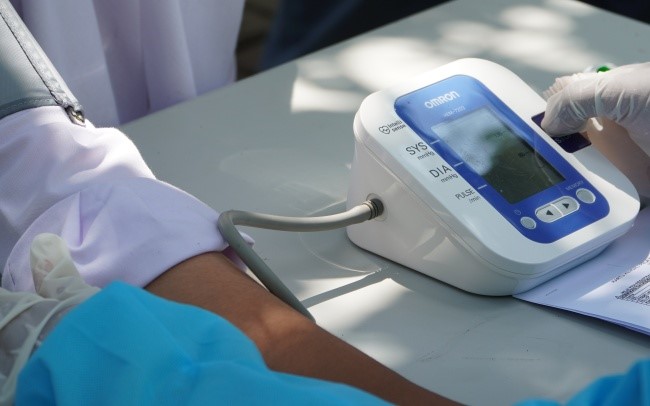
Behandling och medicinering
Medicin mot högt blodtryck
For detailed information about your own medication you should read the leaflet that comes inside the medicine packet.
av Dr Philippa Vincent, MRCGP

Behandling och medicinering
Kalciumkanalblockerare
Kalciumkanalblockerare (ibland kallade kalciumantagonister) är en grupp läkemedel som påverkar hur kalcium passerar in i vissa muskelceller. De ordineras ofta för att hantera högt blodtryck, kärlkramp, Raynauds fenomen och vissa onormala hjärtrytmer (arytmier). De används också för att försöka stoppa för tidig förlossning under graviditet. En kalciumkanalblockerare kan användas ensam. Dock kombineras den ofta med ett annat läkemedel för att behandla högt blodtryck eller kärlkramp, när ett läkemedel ensam inte har fungerat så bra.
av Dr Toni Hazell, FRCGP
Vanliga frågor
What is the primary reason atrial fibrillation increases stroke risk?
Atrial fibrillation (AF) can disrupt the normal blood flow within the heart chambers. This can lead to the formation of small blood clots. If one of these clots travels to the brain and blocks a smaller blood vessel, it can cut off blood supply and cause a stroke.
Are strokes caused by AF typically different from other types of strokes?
Strokes that occur due to atrial fibrillation tend to be more severe than strokes caused by other underlying health issues or conditions.
How often should my stroke and bleeding risk scores be checked?
Both the CHA2DS2-VASc stroke risk score and the ORBIT bleeding risk score should be re-evaluated by your doctor at least once a year.
Is it possible to reduce the risk of stroke surgically for AF patients?
Yes, an operation called left atrial appendage occlusion can be performed. This procedure closes a specific pouch in the heart to reduce stroke risk. It is generally considered for those at high risk of stroke who cannot take anticoagulant medications.
Vidare läsning och referenser
- Atrial fibrillation: diagnosis and management; NICE guideline (April 2021 - last updated June 2021)
- Förmaksflimmer; NICE CKS, October 2024 (UK access only)
- Thoracoscopic exclusion of the left atrial appendage in atrial fibrillation (with or without other cardiac surgery) for the prevention of thromboembolism, NICE Interventional Procedure Guideline, June 2011
- WatchBP Home A for opportunistically detecting atrial fibrillation during diagnosis and monitoring of hypertension; NICE Medical Technologies Guidance, January 2013
- European Society of Cardiology; Guidelines for Management of Atrial Fibrillation, 2020
- Isaew A, Adderley NJ, Ryan R, et al; The treatment of paroxysmal atrial fibrillation in UK primary care. Heart. 2017 Jun 1. pii: heartjnl-2016-310927. doi: 10.1136/heartjnl-2016-310927.
Om författarenVisa fullständig biografi
Uppdaterad av

Dr Colin Tidy, MRCGP
Allmänläkare, Medicinsk Författare
MBBS, MRCGP, MRCP (Paediatrics), DCH
Dr Colin Tidy är en NHS-läkare, baserad i Oxfordshire.
Om recensentenVisa fullständig biografi

Dr Hayley Willacy, FRCGP
Allmänläkare, Medicinsk Författare
MBChB (1992), DRCOG, DFFP, MRCOG (Part 1) MRCGP (2007), DFSRH (2013), MSc - medical education (2020)
Dr Hayley Willacy var en NHS-läkare som arbetade i nordvästra England och gick i pension från klinisk praktik 2022 efter 30 år.
Artikelhistorik
Artikeln finns också på Engelska, Tyska, Spanska, Franska, Italienska, Portugisiska, Hindi, Hebreiska, Arabiska, och Svenska.
Nästa granskning: 18 dec 2027
19 dec 2024 | Senaste versionen
Dela dina tankar eller erfarenheter med andra i vår patientgemenskaper.
Enkel tillgång till pålitliga behandlingar och hälsotjänster online.
Common conditions
Get help with common conditions through the NHS, without a GP appointment.





Anmäl dig till Patientens nyhetsbrev
Din veckovisa dos av tydliga, pålitliga hälsoråd - skrivna för att hjälpa dig känna dig informerad, självsäker och i kontroll.
Genom att prenumerera accepterar du våra Sekretesspolicy. Du kan avsluta prenumerationen när som helst. Vi säljer aldrig dina uppgifter.