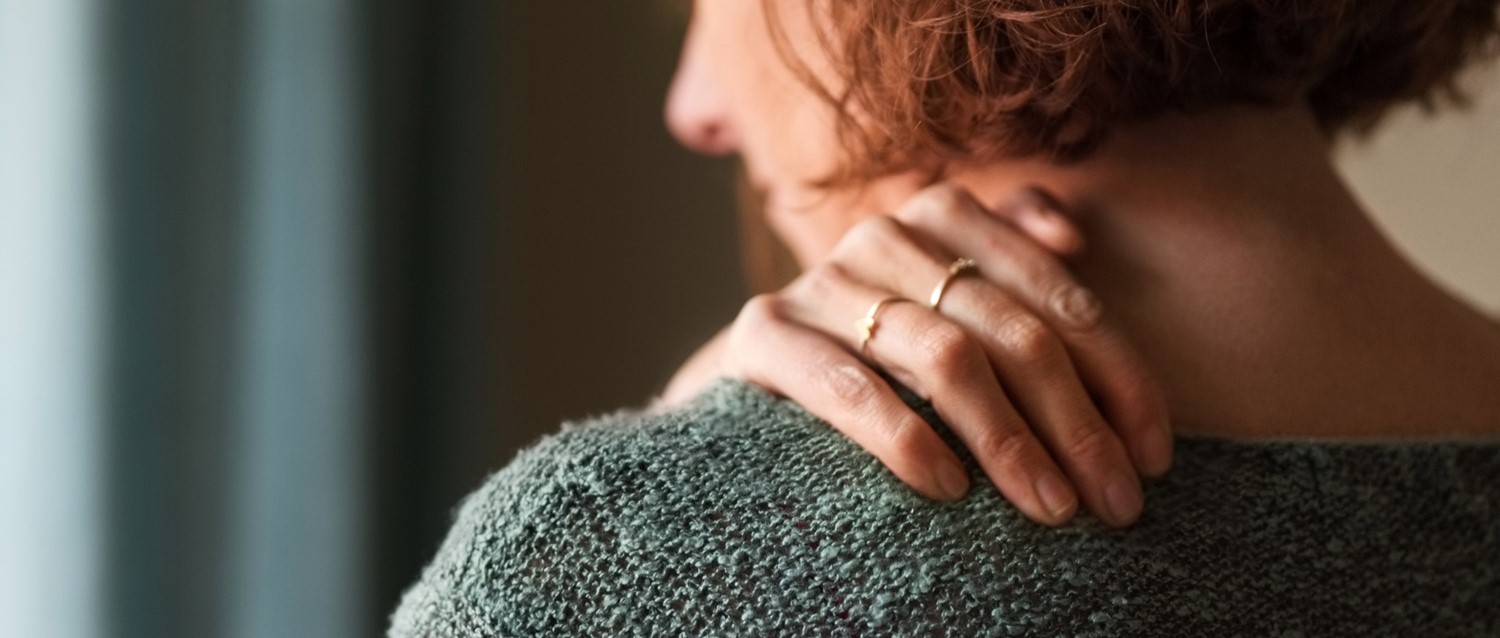
De bästa sätten att lindra nack-, rygg- och axelsmärta hemma
Granskad av Dr Sarah JarvisFörfattad av Andrea DowneyUrsprungligen publicerad 6 May 2020
Uppfyller patientens redaktionella riktlinjer
- Ladda nerLadda ner
- Dela
- Language
- Diskussion
- Ljudversion
- Lägg till i föredragna källor på Google
Working from home has many perks. You can make a snack whenever you like and no one knows if you're wearing comfy clothes from the waist down. But neck, back and shoulder pain isn't one of the many benefits. Fortunately, the right stretches can get rids of those aches and pains.
Use Patient's coronavirus checker tool if you have any symptoms of fever or a new cough. Until you have used the tool and been advised what action to take, please stay at home and avoid contact with other people.
Have you noticed your neck, back and shoulders ache a lot more now you've started working from home during the coronavirus lockdown? Sitting for long periods of time can cause muscle pain, especially if you're sitting in the wrong position. And, let's face it, working from home means the sofa beckons more than it should.
Luckily, there are a few simple stretches and exercises you can do to ease the pain. Vicki Anstey, founder of Barreworks, and Nick Worth, physiotherapist and lead clinician at Ascenti, explain.
Perfect posture
It all starts with posture, according to Anstey. When we sit at a desk we tend to end up slouching after a few hours. Or, even worse for the posture, we're hunched over a laptop.
"The body is so complex and deeply interconnected that often exercises that seem to bear no relation to the perceived epicentre of pain can be effective. So, my advice if you are dealing with pain in the shoulders, neck or lower back is to start by addressing your posture," Anstey explains.
"With attention brought to your posture, you should be spending more of your day in a beneficial position for your muscles, joints, internal organs and respiratory and digestive systems. You might be surprised how far that goes to relieving any lingering pain in the body."
Moving your muscles every day is key to ensuring the pain stays at bay, she says.
"Targeted stretches can be done daily, but listen to your body and dial up or down as needed or as much as can be tolerated," Anstey adds.
But don't worry, you don't need expensive gym equipment or other tools to ease the pain and create more fluidity in your muscles; there are several things you can do from home.
Banishing back pain
Simple stretches done throughout the day, or when you feel like you need to, can make all the difference to your muscles to reduce ryggsmärta.
"McKenzie cobra extensions are a great way to mobilise your back if you've been sitting for a while. Simply stand upright with your feet shoulder width apart and put your hands on your back to give it support. Keeping your legs straight, lean back as far as you can go. If you can do this once it will help but do a few in a row for added benefits," Worth says.
"Supine knee rolls reduce stiffness in your spine and promote rotation of your pelvis, hip and knee. Lie on your back with your knees in the air and keep both your feet and knees together. Roll your knees from side to side to touch the ground.
"The piriformis muscle is located deep beneath the glutes and, if it's tight, it can lead to lower back pain. To stretch your glutes, start by lying on your back with your knees bent and then cross the foot of the leg you are stretching over the knee of your other leg.
"Put one hand on top of your stretching knee and the other around your ankle and then slowly pull your knee towards your opposite shoulder, until you feel a stretch in your glutes, and then hold this for 30 seconds to a minute."
Navigating neck pain
The key with neck exercises is they should be very slow and controlled: sharp movements could exacerbate your nacksmärta, Worth explains.
"With a straight back, lower your neck to your chest and hold. Relax, and then slowly move your head back to face the ceiling," he says.
"Then gently tilt your head towards your right shoulder, aiming to touch it with your ear and holding it when you feel the stretch. Repeat on the other shoulder. Then, keeping your back straight, slowly turn your head to the right, holding the stretch, and then repeat on the left side.
"Scapular retractions can really help to improve posture. Stand upright with your arms rotated outwards and held up in the air like wings. Gradually pull your arms downwards and your shoulder blades back, and hold the retraction for 10 seconds, rest and then repeat up to 10 times."
Surviving shoulder pain
Many people hold tension in their shoulders when they're stressed, which can cause pain. The shoulders also hunch forward when we slouch, which can also lead to stiffness.
"Shoulder shrugs are a great way to strengthen your shoulder muscles and your upper arms," says Worth. "Stand with your feet shoulder width apart, your arms by your side and your knees slightly bent and facing straight ahead. While you inhale, slowly bring your shoulders high up towards your ears, then lower them back down and breathe out. Aim for three sets of 10 repetitions.
"Another good exercise for the shoulders involves using a towel. Put your arms by your side with your elbows at 90°; then, gripping the towel firmly, try to pull your hands apart.
"Cat pose is a yoga pose that provides a gentle massage to the spine and can help the shoulders. Start on your hands and knees, ensuring your knees are in line with your hips, and that your wrist, elbows and shoulders are all in line too, and you are facing the floor.
"As you breathe out, try to round your spine upwards towards the ceiling, while keeping your shoulders and knees in position. Then inhale and return to your original position. Repeat several times."
Help from around the house
There are several things around the house you can use to help you stretch, or loosen up your muscles.
"Doorways can be useful to reach up to in a full body stretch. If you can reach to the top of the frame, press your hands into it and push through with your armpits to open up shoulder girdles," Anstey says.
"Foam rollers can be a great way to ease muscle pain and stiffness," adds Worth. "Don't worry if you don't have one as you can achieve similar results with a rolled-up towel or tennis ball. And you can use frozen peas as ice treatment and warm water in a hot water bottle to apply heat.”
Take a break
It's easy to get into a routine, focused on the job at hand, and forget to get up and move around.
But it's important to remember to take regular breaks away from your work station to keep your body moving. Even getting up to make a cup of tea is a good break for your muscles.
Anstey recommends you get up and move at least every two hours, or more regularly if you can.
"Regular breaks are hugely important for both the body and mind. Every 20 minutes stand up and move for 20 seconds. Try to walk daily for 30-60 minutes if you can, as it's a great way to stay fit and unwind," Worth adds.
Patientval för Neck and shoulder

Ben, leder och muskler
Video: Övningar för nacksmärta
Neck pain is very common but in most cases is not caused by a serious problem. Pain is more likely to be muscular and the exercises outlined here are recommended to ease symptoms.
by Lilly Sabri, MHPC

Ben, leder och muskler
Hur man behandlar nacksmärta
Neck pain is a common problem that affects most people at some point in their lives. The right neck pain treatment can help reduce discomfort, improve movement, and support recovery, whether symptoms have come on suddenly or developed gradually over time.
av Josh Alderman
Om författaren

Andrea Downey
Om recensentenVisa fullständig biografi

Dr Sarah Jarvis
Klinisk konsult
MA (Cantab), BM, BCh (Oxon), DRCOG, FRCGP, MBE
Efter att ha utbildat sig i medicin vid Cambridge och Oxford blev Dr Sarah Jarvis MBE allmänläkare.
Artikelhistorik
Informationen på denna sida är granskad av kvalificerade kliniker.
Artikeln finns också på Engelska, Tyska, Spanska, Franska, Italienska, Portugisiska, Hindi, Hebreiska, Arabiska, och Svenska.
6 May 2020 | Ursprungligen publicerad
Författad av:
Andrea Downey
Granskad av
Dr Sarah Jarvis

Fråga, dela, anslut.
Bläddra i diskussioner, ställ frågor och dela erfarenheter inom hundratals hälsorelaterade ämnen.

Känner du dig sjuk?
Bedöm dina symtom online gratis
Anmäl dig till Patientens nyhetsbrev
Din veckovisa dos av tydliga, pålitliga hälsoråd - skrivna för att hjälpa dig känna dig informerad, självsäker och i kontroll.
Genom att prenumerera accepterar du våra Sekretesspolicy. Du kan avsluta prenumerationen när som helst. Vi säljer aldrig dina uppgifter.
Mer om ben, leder och muskler
- Är kosttillskott för ledvärk värda dina pengar?
- Dålig hållning: hur man övervinner 'COVID-slumpen'
- Kan kreatintillskott hjälpa till att bygga muskler?
- NyDo I need an MRI for my back pain?
- Behöver du fysioterapi efter ledbyte?
- Hur man får kontroll över ryggsmärta
- Hur du skyddar dina ben när du blir äldre
- Hur man behandlar tennisarmbåge hemma
- Knähälsa: hur man förebygger knäskador
- Knäsmärta som inte försvinner: När är det dags att göra en skanning?
- Naturläkemedel för lindring av ledvärk
- Andra videor om ben och leder
- Stormarknadsshopping för mat som hjälper stela och smärtsamma leder
- När bör du oroa dig för nacksmärta?
- NyWhy do my joints hurt when the weather changes?
- Varför huvudskador inom sport måste tas på större allvar
- Varför klimakteriet kan orsaka osteoporos
- UppdateradWimbledon fungerar som en påminnelse: ta din ledvärk på allvar
- Kvinnors hälsa inom idrott: skador, menstruation och moderskap