
Hur man blir av med instängd gas: huskurer som fungerar
Granskad av Dr Colin Tidy, MRCGPFörfattad av Josh AldermanUrsprungligen publicerad 6 nov 2025
Uppfyller patientens redaktionella riktlinjer
- Ladda nerLadda ner
- Dela
- Language
- Diskussion
- Ljudversion
- Lägg till i föredragna källor på Google
Most people experience trapped wind from time to time. It’s that bloated, uncomfortable feeling in your stomach or chest that just won’t shift. It’s usually harmless, but it can be embarrassing and sometimes quite painful.
The good news is that a few simple home remedies and lifestyle tweaks can make a big difference.
Trapped wind happens when gas builds up in your digestive system. This can come from swallowing air when you eat or drink, or as a by-product of digestion when food breaks down in your gut.
Knowing what causes trapped wind can help you choose the right remedies to get rid of it.
Trapped wind remedies
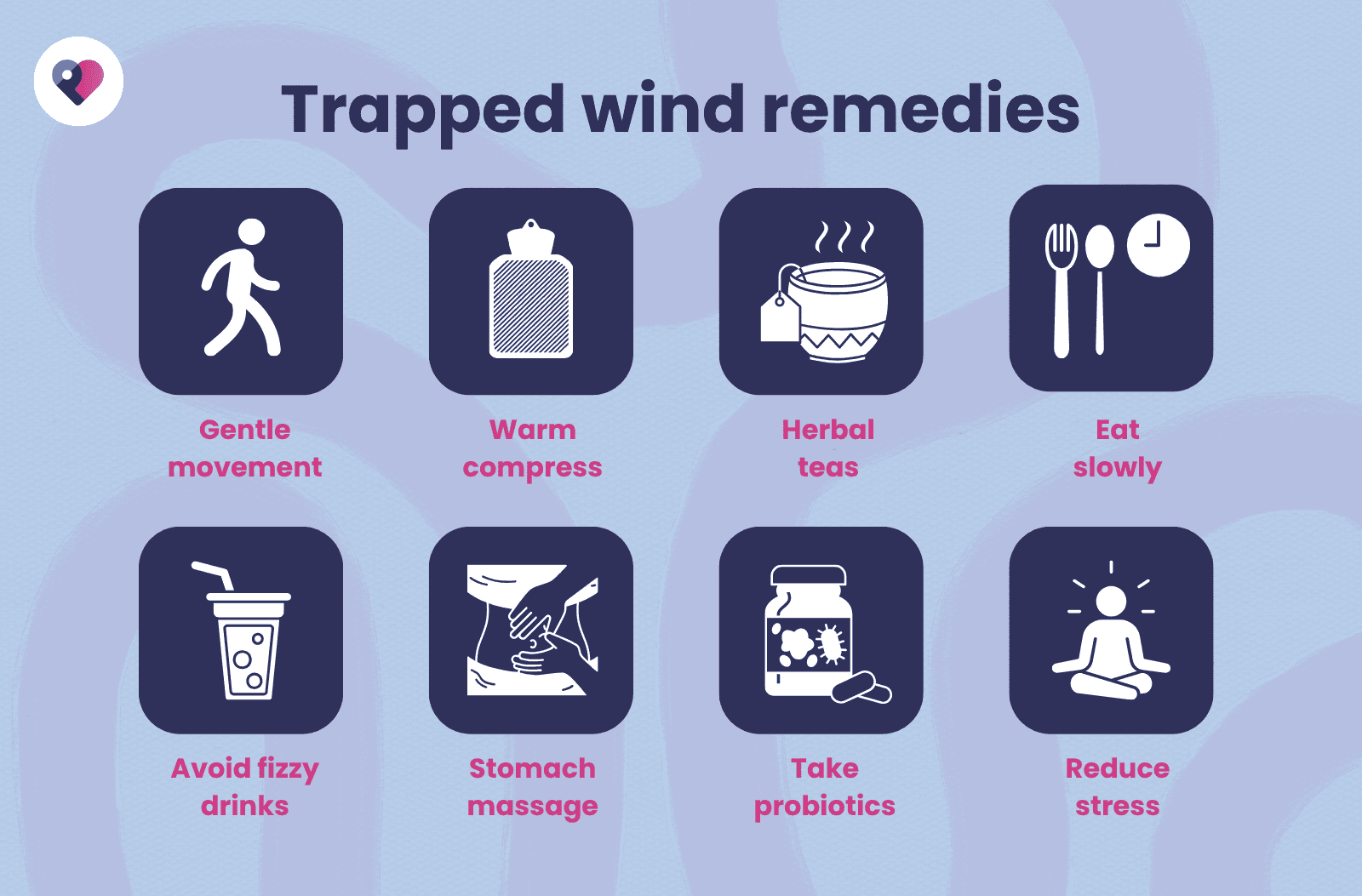
Home remedies for trapped wind
1. Gentle movement
Light exercise such as walking or stretching can help move gas through your digestive tract, providing quick relief. Yoga poses such as ‘wind-relieving pose’ - aptly named - can be particularly effective.
Even a short 10-minute walk after meals can help your body process food and reduce bloating.
2. Warm compress
A warm compress or hot water bottle placed on your stomach can help relax your muscles and reduce discomfort.
The warmth improves blood flow to the area, making it easier for gas to move through your gut.1
3. Herbal teas
Certain herbal teas are known for easing digestive discomfort. Peppermint, chamomile, fennel, and ginger teas can help relax your digestive system and reduce uppblåsthet.2
Sip slowly after meals for the best results.
4. Avoiding fizzy drinks and chewing gum
Carbonated drinks introduce extra air into your digestive system, while chewing gum can cause you to swallow air. Both can worsen trapped wind and bloating.
Try replacing fizzy drinks with still water and skip the gum if you’re prone to bloating.
5. Eating more slowly
Rushing your meals or eating on the go means you’re likely swallowing air along with your food. Take smaller bites, chew thoroughly, and try not to talk while eating.
This simple change can reduce the amount of air in your digestive system.
6. Massaging your abdomen
Gently massaging your abdomen in a circular motion can encourage trapped gas to move through your intestines.
Start on the lower right side of your stomach and move up, across, and down again in the direction of your colon.
7. Adjusting your diet
If you frequently experience trapped wind, consider keeping a food diary to identify triggers, and adjust your diet accordingly. Reducing your intake of high-fibre foods, dairy, or artificial sweeteners - such as sorbitol - may also help.3
You might also try smaller, more frequent meals rather than large ones, which can be easier for your body to digest.
8. Probiotics
Probiotika are live bacteria that support gut health and may reduce symptoms such as bloating and trapped wind, particularly in people with IBS.
You can find probiotics in yoghurts, fermented foods such as kefir or sauerkraut, or in supplement form.
9. Over-the-counter remedies
If lifestyle changes aren’t enough, over-the-counter products containing simeticone (an anti-foaming agent) can help break down gas bubbles in your gut, making them easier to pass.
Speak to your pharmacist about which options are suitable for you.
10. Managing anxiety
Stress och ångest can affect your digestive system, sometimes worsening trapped wind.
Relaxation techniques such as deep breathing, mindfulness, or gentle exercise can help calm your digestive system and reduce symptoms.
När du bör uppsöka läkare för gasbesvär
Trapped wind is usually nothing to worry about, but if your symptoms are frequent, severe, or accompanied by other issues like weight loss, being sick (vomiting), or changes in your bowel habits, speak to your doctor.
These could be signs of an underlying digestive condition such as IBS, celiaki, or an infection.
Sammanfattning
Trapped wind can often be relieved with simple home remedies. Moving your body, warm compresses, and herbal teas such as peppermint or ginger help ease bloating and move trapped gas through your digestive system.
Eating slowly, avoiding fizzy drinks, and gentle abdominal massage can also reduce discomfort.
If your symptoms persist or you’re unsure what’s causing them, speak with a healthcare professional for advice.
Managing trapped wind effectively is often about understanding your body - and giving your digestive system the support it needs to function smoothly.
Vidare läsning
Patientval för General digestive health
Kost och näring
Vad är ditt tarmmikrobiom?
Let’s talk about something small that has a big impact on your health - the gut microbiome. This hidden universe of microbes plays an important role in your wellbeing. How you treat these tiny residents can make a world of difference to how you feel.
av Victoria Raw
Matsmältningshälsa
Vad är sambandet mellan IBS och ångest?
Irritable bowel syndrome (IBS) can cause a combination of tummy cramps, diarrhoea, bloating and constipation. It's a long-term health condition that can affect your quality of life. Although changing your diet and taking certain medicines can help, poor mental health and IBS symptoms can mutually aggravate each other.
av Victoria Raw
Om författarenVisa fullständig biografi

Josh Alderman
SEO-chef
BA (Hons) Media and Print Journalism
Josh is an SEO executive at Patient with over 4 years experience working within the healthcare sphere.
Om recensentenVisa fullständig biografi

Dr Colin Tidy, MRCGP
Allmänläkare, Medicinsk Författare
MBBS, MRCGP, MRCP (Paediatrics), DCH
Dr Colin Tidy är en NHS-läkare, baserad i Oxfordshire.
Artikelhistorik
Informationen på denna sida är granskad av kvalificerade kliniker.
Artikeln finns också på Engelska, Tyska, Spanska, Franska, Italienska, Portugisiska, Hindi, Hebreiska, Arabiska, och Svenska.
Next review due: 6 Nov 2025
6 nov 2025 | Ursprungligen publicerad
Författad av:
Josh AldermanGranskad av
Dr Colin Tidy, MRCGP

Fråga, dela, anslut.
Bläddra i diskussioner, ställ frågor och dela erfarenheter inom hundratals hälsorelaterade ämnen.

Känner du dig sjuk?
Bedöm dina symtom online gratis
Anmäl dig till Patientens nyhetsbrev
Din veckovisa dos av tydliga, pålitliga hälsoråd - skrivna för att hjälpa dig känna dig informerad, självsäker och i kontroll.
Genom att prenumerera accepterar du våra Sekretesspolicy. Du kan avsluta prenumerationen när som helst. Vi säljer aldrig dina uppgifter.
Mer om matsmältningshälsa
- 6 naturliga botemedel mot förstoppning
- Kost vid sura uppstötningar: mat att äta och undvika
- Kan gastroenterit ha långsiktiga effekter?
- Crohns sjukdom hos barn: Hur du kan stödja ditt barn
- Kost vid gallsten: mat att äta och undvika
- Hur man undviker matförgiftning i sommar
- Hur man hanterar halsbränna under graviditeten
- Hur man blir av med springmask
- How to treat bowel incontinence
- Hur man behandlar matförgiftning hemma
- Hypnoterapi för IBS: tarm-hjärna-axeln
- IBS-diet: mat att äta och undvika
- Är det matsmältningsbesvär eller något allvarligare?
- Bajs - vad är normalt?
- NyRaw milk - is it actually good for you or just another wellness trend?
- De 5 bästa probiotiska livsmedlen för en hälsosam tarm
- Vad gör bukspottkörteln?
- Hur det är att ha en osynlig funktionsnedsättning
- UppdateradVad är skillnaden mellan IBS och IBD?
- Vad är sambandet mellan ångest och tarmhälsa?